
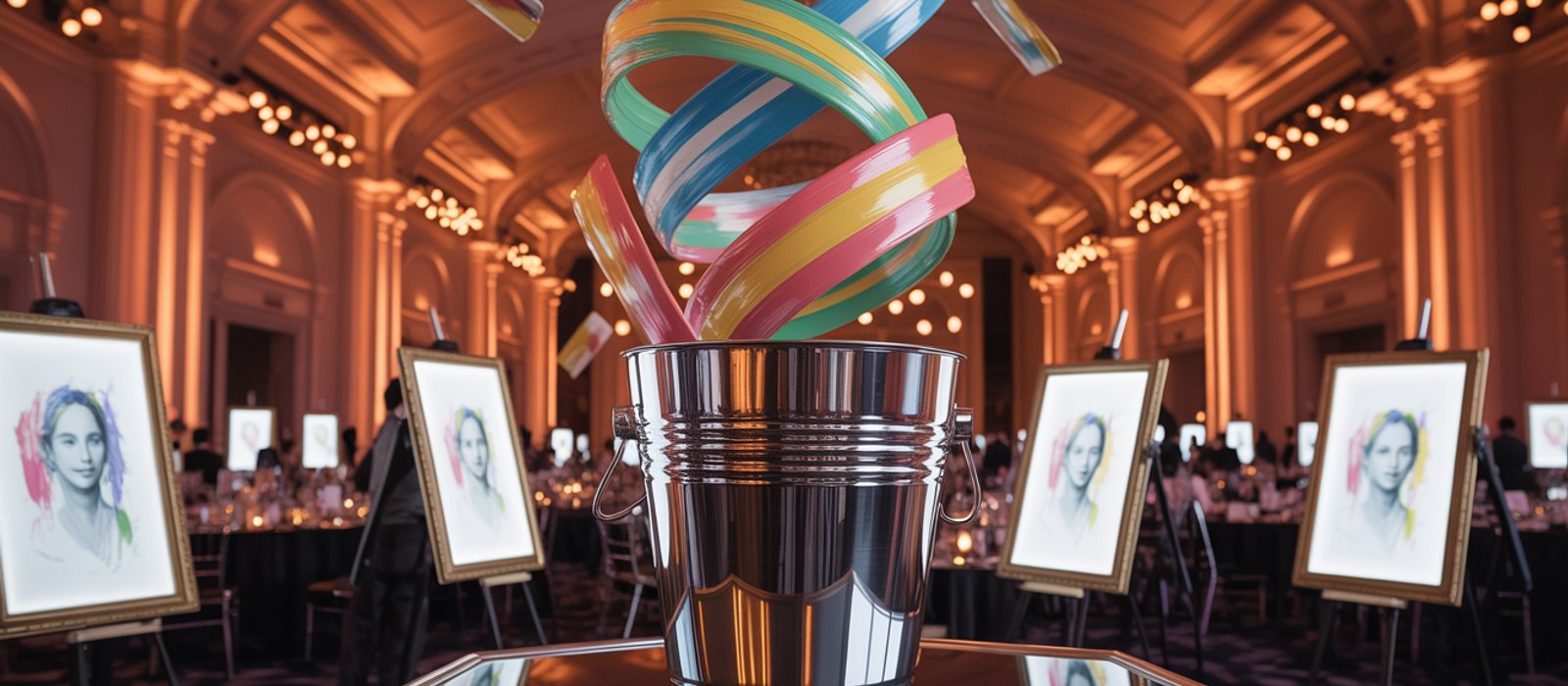
There is a particular kind of charity event that we have all attended. The venue is fine. The raffle prizes are fine. Someone gives a heartfelt speech. Then guests spend forty minutes nursing a warm Pinot Grigio near the exit, waiting for a socially acceptable moment to leave. Donations are modest. The committee is exhausted. Nobody posts anything.
This is not a failure of the cause. It is a failure of the entertainment programme.
The good news: it is entirely fixable. And the fix does not require a celebrity host, a pyrotechnics licence, or a budget that would alarm your trustees.
Why "Fun" Is Not a Frivolous Priority
Charity event organisers are often cautious about spending on entertainment. Understandably so — every pound spent on the evening's programme is a pound not going to the cause. But this logic, taken too far, produces exactly the kind of low-energy event that raises less money than it should.
The relationship between guest experience and fundraising outcomes is not subtle. Guests who are genuinely engaged stay longer. Guests who stay longer spend more — at the bar, on the auction, in the donation round. Guests who are having a visibly good time tell their friends, which is where the real multiplication happens.
Dwell time is a fundraising metric. It is just rarely labelled as one.
Interactive entertainment — the kind that requires guests to do something rather than simply watch — consistently outperforms passive formats on all three of the measures that actually matter: time on site, average spend per head, and post-event social reach. For charity event organisers searching for fundraising event ideas in the UK that justify their budget, this is the argument worth making to your committee.
What "Interactive" Actually Means (And What It Doesn't)
A photo booth in the corner that guests use twice before forgetting about it is not interactive entertainment. It is a piece of equipment that requires a dedicated Instagram caption nobody writes.
True interactive entertainment creates a moment. It gives guests something to engage with, something to share, and — critically — something to talk about while they are still in the room. That last part matters enormously. Conversations that start around an activity lead naturally to conversations about the cause. Which lead to donations.
Face-in-hole boards are a deceptively effective example of this principle in action. The format is simple: guests place their face in a painted scene and someone takes a photograph. The scene itself does the heavy lifting. Commission a bespoke design that reflects your charity's mission — a wildlife conservation board featuring endangered species, a hospital backdrop for a medical research charity, a community mural for a local cause — and suddenly you have a centrepiece that communicates your message, generates shareable content, and gives every guest a reason to linger.
The social media mechanics are straightforward. Guests photograph themselves, they post, they tag. Each post reaches an audience that was not in the room. Your entertainment becomes your organic marketing campaign, which is a sentence that has never been written about a tombola.
For charity fundraising event ideas in the UK, this category of interactive art experience sits in a useful middle ground: more memorable than a quiz, more affordable than a live act, and considerably more photogenic than a sponsored silence.
Making the Business Case to Your Trustees
If you are presenting this to a fundraising committee that regards entertainment spend with suspicion, here is the practical framing.
A bespoke face-in-hole board hire is a one-off cost that generates trackable social content for weeks after the event. If thirty guests post a photograph from your event, and each of those guests has an average of four hundred followers, that is twelve thousand organic impressions from a single prop. You cannot buy twelve thousand targeted impressions for what a quality board hire costs. You simply cannot.
Beyond social reach, consider the floor-level dynamics at your event. Interactive art installations create natural gathering points. They break up the room, they give guests who do not know each other an excuse to talk, and they reduce the number of people quietly planning their escape route. Every additional twenty minutes a guest spends at your event is twenty minutes in which they might bid on the auction, respond to the donation ask, or buy another drink.
The question is not whether entertainment is worth the spend. The question is whether your entertainment is earning its place.
Fun fundraising activities hired for UK charity events should be evaluated on the same criteria as any other line item: what does this deliver, and does it deliver more than it costs? For interactive art experiences with a clear social sharing mechanic, the answer is almost always yes.
Practical Checklist for Getting It Right
The difference between interactive entertainment that works and interactive entertainment that stands unused in a corner comes down to a few practical decisions.
Position it prominently. An installation near the entrance or adjacent to the bar gets seen. One tucked behind a pillar does not. If you are hiring a face-in-hole board, place it somewhere with decent lighting and enough space for a small audience to gather.
Give it a reason to exist within your narrative. Bespoke artwork that connects to your cause turns a photo opportunity into a talking point. Generic designs are fine; relevant designs are better. Work with your supplier to brief a scene that tells your story.
Have someone actively encouraging use. A board that sits unattended will be used by the boldest guests. A board that a member of your team enthusiastically directs guests towards will be used by everyone. Staff or volunteer energy around your interactive elements is free amplification.
Create a social hook before the event. Announce the installation in advance, establish an event hashtag, and make it easy for guests to know where and how to share. Post-event, reshare guest content from your charity's channels to extend the reach further.
Photograph it yourself. High-quality images of guests engaging with your installation become content for your next fundraising appeal, your annual report, and your social media for the following six months.
The bucket by the door is not going anywhere. But it does not have to be the most memorable thing about your fundraiser.
Interactive art experiences at charity events are not a luxury add-on. They are a mechanism for keeping guests engaged longer, giving them something worth sharing, and creating the kind of warm, participatory atmosphere in which people are genuinely more likely to give generously.
If you are planning a charity fundraiser and want entertainment that earns its place on the budget sheet, get in touch with the National Self Portrait Gallery to discuss bespoke hire options. We make the art. Your guests make the donations.